
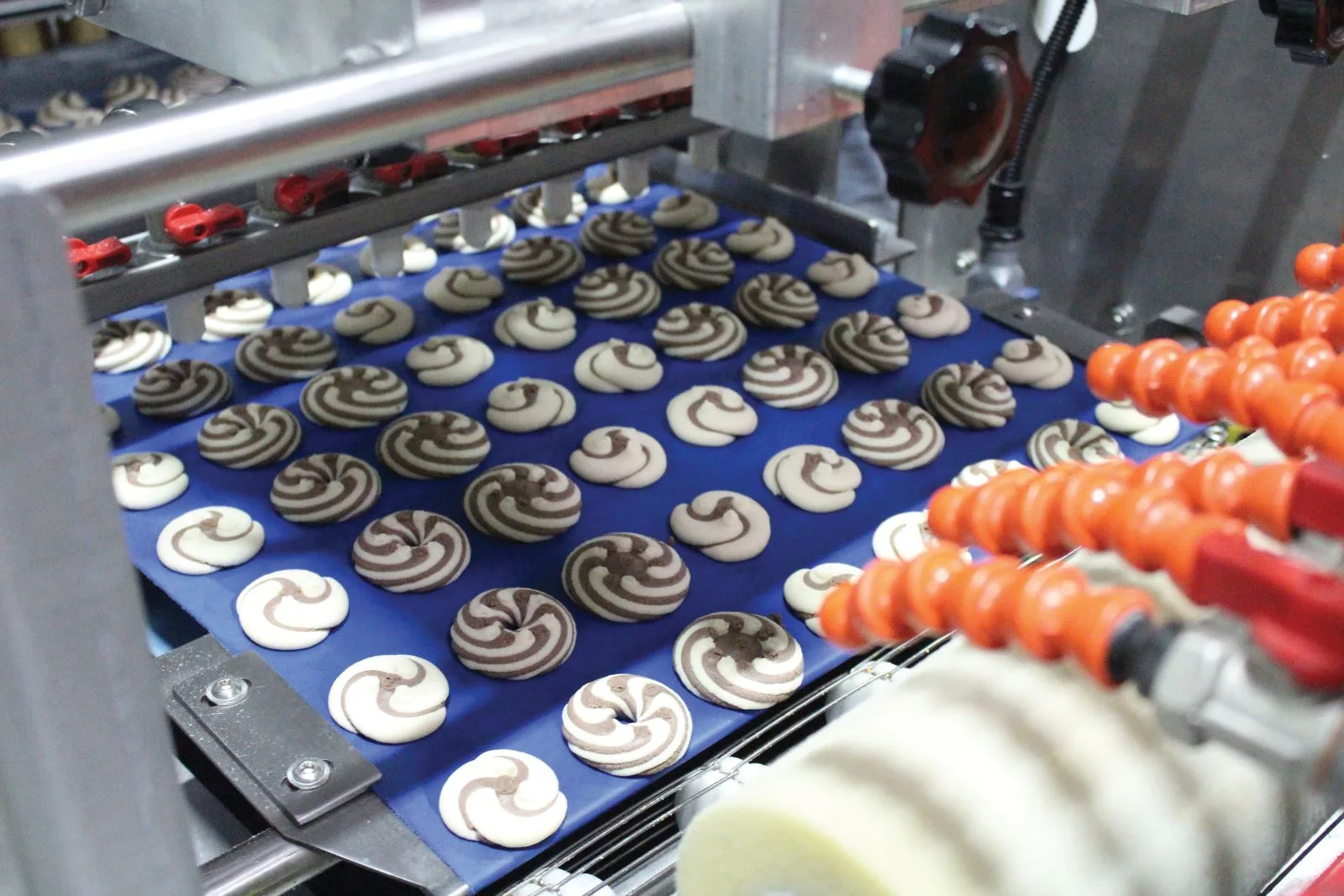
Efficiency, hygiene and consistency are becoming more critical every day in industrial food production. Automation technologies minimise human error on production lines while speeding up processes and raising quality standards.
Why automation became critical
Three factors decide the outcome in industrial food production: efficiency, hygiene and consistency. When dosing and handling are done by hand, the weight difference between products grows, cleaning takes longer and quality fluctuates from shift to shift. Automation addresses all three at once: it speeds up the process while removing human-induced variation.
Precision becomes a measurable value
On STMACH dosing and injection machines, filling accuracy works within a ±1-3 gram range. Servo-controlled or pneumatic injection options can be configured with 1 to 8 nozzles depending on the product. That means the same weight and the same appearance on every unit: waste drops and the recipe becomes repeatable.
A line is a whole, not a set of separate machines
The output of a production line is governed by its slowest link. The flow starts at the dough mixer and storage tank and continues through dosing, sauce injection, vacuum tray unloading, conveyors and 90°/180° turning units. PVC, PU or modular belt options in the 200-800 mm width range, together with adjustable speed control, keep the entire line running at one tempo.
The control panel should make the operator's job easier
The machines are managed through a touch HMI and an inverter. Production speed and mould settings are changed from the panel; settings saved for different products remove the need to set up again at shift change. They run on a standard 380-400 V / 50 Hz supply.
Hygiene is not an afterthought
Surfaces in contact with food are made from 304 stainless steel. Moulds and contact parts are easy to remove; cleaning takes less time and the line returns to production sooner. Hygiene is not an accessory but a design decision built into the machine.
What follows installation is part of the automation
An automation investment does not end when the machine is delivered. Site assembly, electrical and pneumatic connections, first production tests, operator training and a scheduled maintenance programme are all part of what keeps the line performing as it did on day one.